
Select the model and scenario
Choose Crops, Trees, or Livestock, then work in the Low, Base, or High case. Use Base as the most supportable operating plan.
AgriModel translates land, species, yield, price, labor, inputs, logistics, capital, and financing assumptions into a connected ten-year view of production, cash flow, profitability, valuation, and shareholder returns.
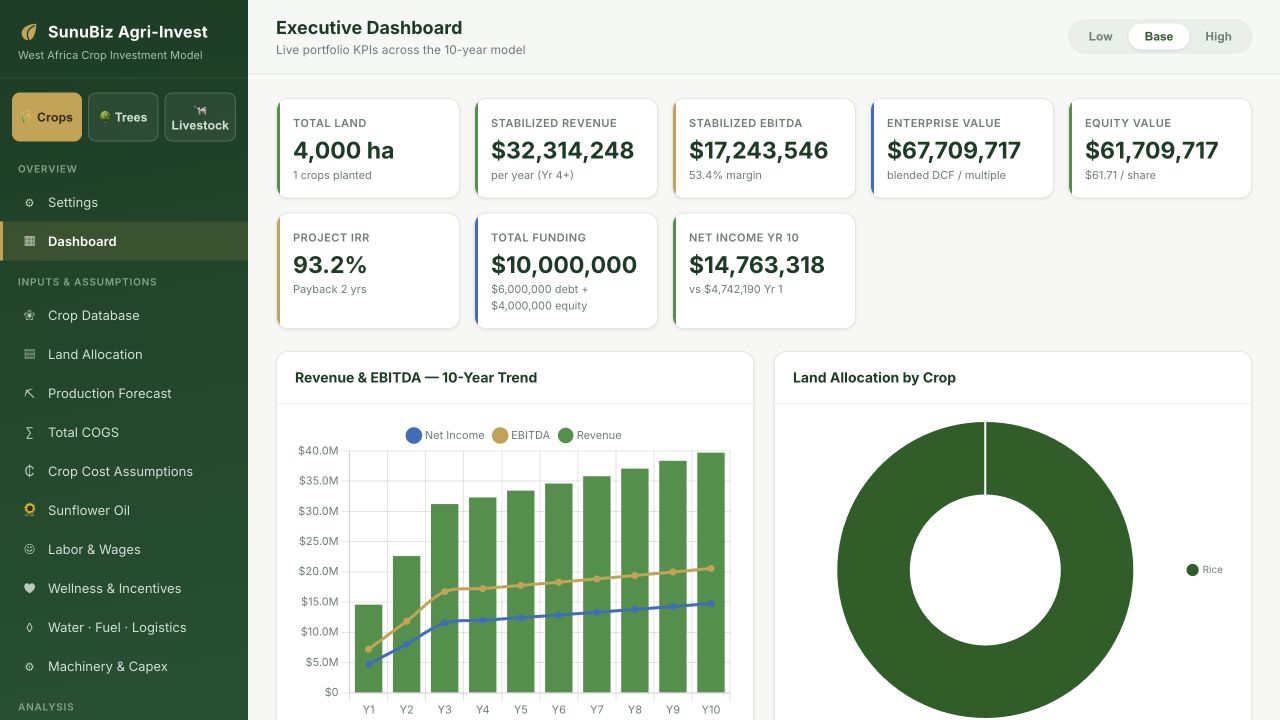
Each model uses the same investment discipline while adapting the operating logic, timelines, costs, production curves, and commercial outputs to the selected agricultural system.
Annual and seasonal crop portfolios, land allocation, yields, rotations, processing, and profitability by hectare.
Explore Crops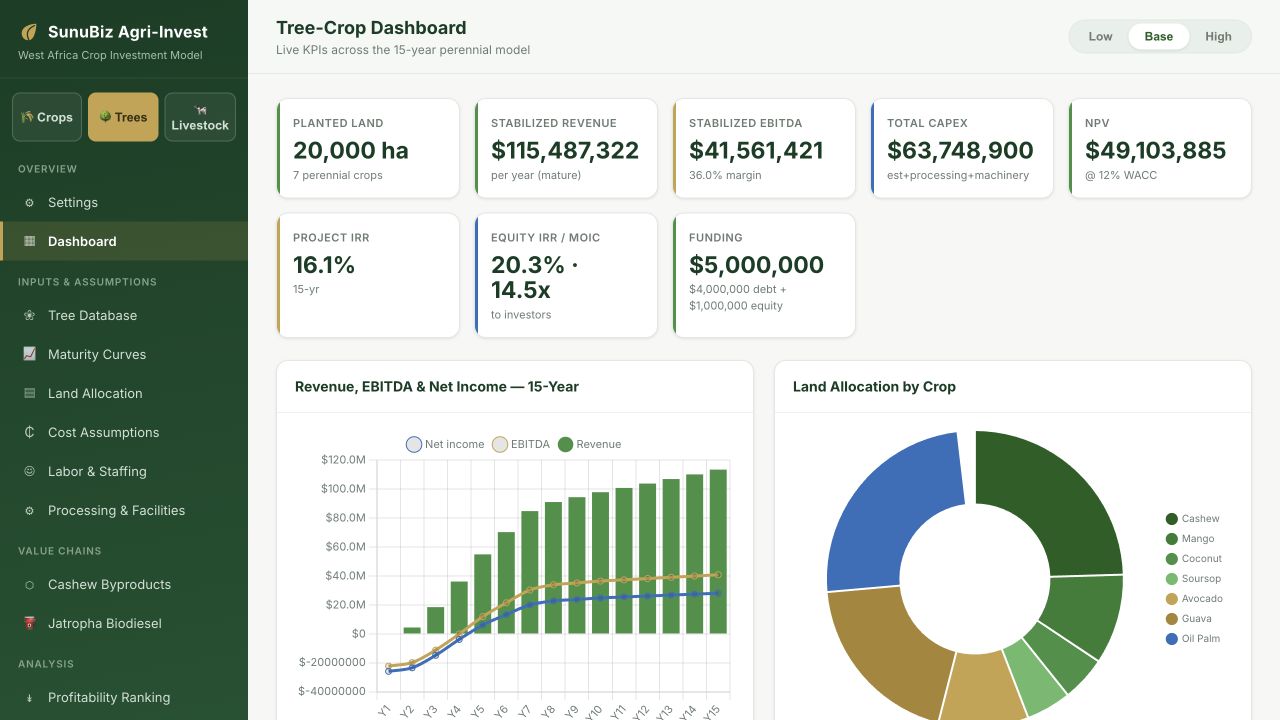
Orchards and tree crops with establishment years, maturity curves, harvest ramp-up, long-life assets, and valuation.
Explore Trees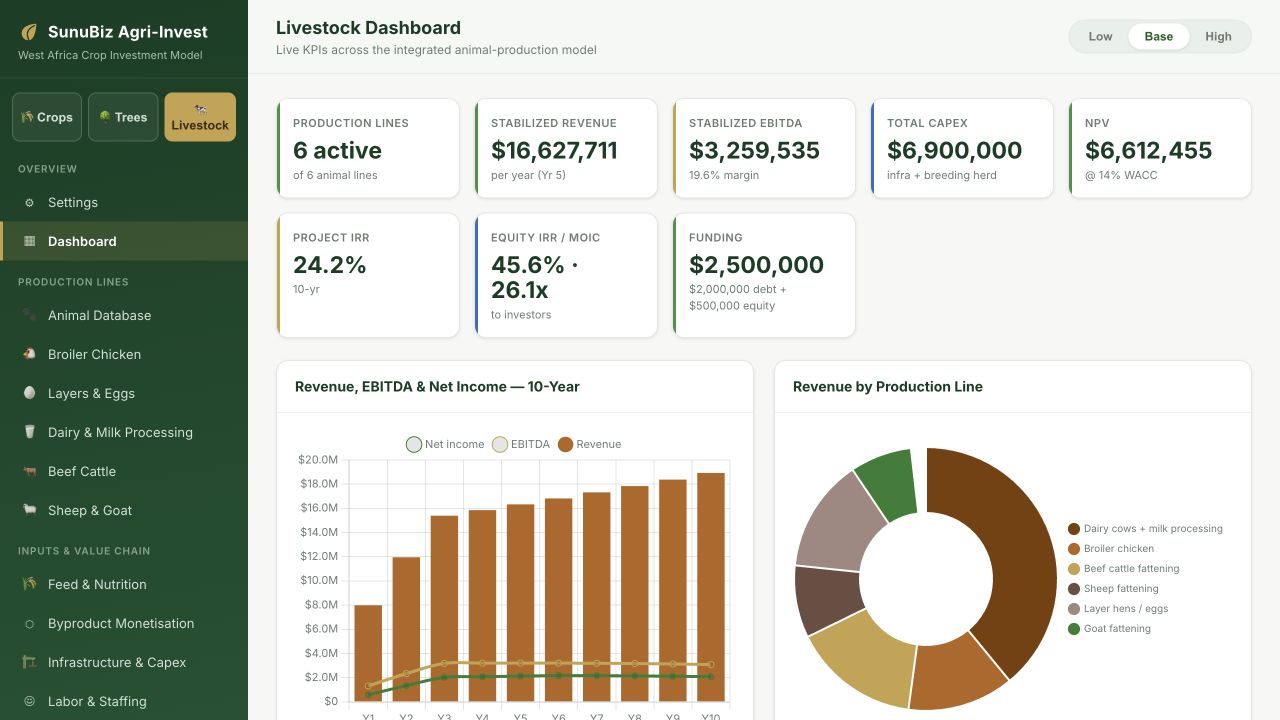
Herd, flock, dairy, meat, feed, breeding, mortality, capacity, and recurring production economics.
Explore LivestockAgriModel helps sponsors, governments, cooperatives, developers, lenders, and investors test whether a proposed agricultural program can operate sustainably, fund its growth, withstand uncertainty, and generate acceptable returns.
Translate acreage, species, calendar, resources, people, equipment, and logistics into an executable production plan.
See cost per hectare or unit, revenue, margins, cash requirements, debt service, and profitability over time.
Compare low, base, and high cases and stress yield, price, cost, timing, and financing assumptions.
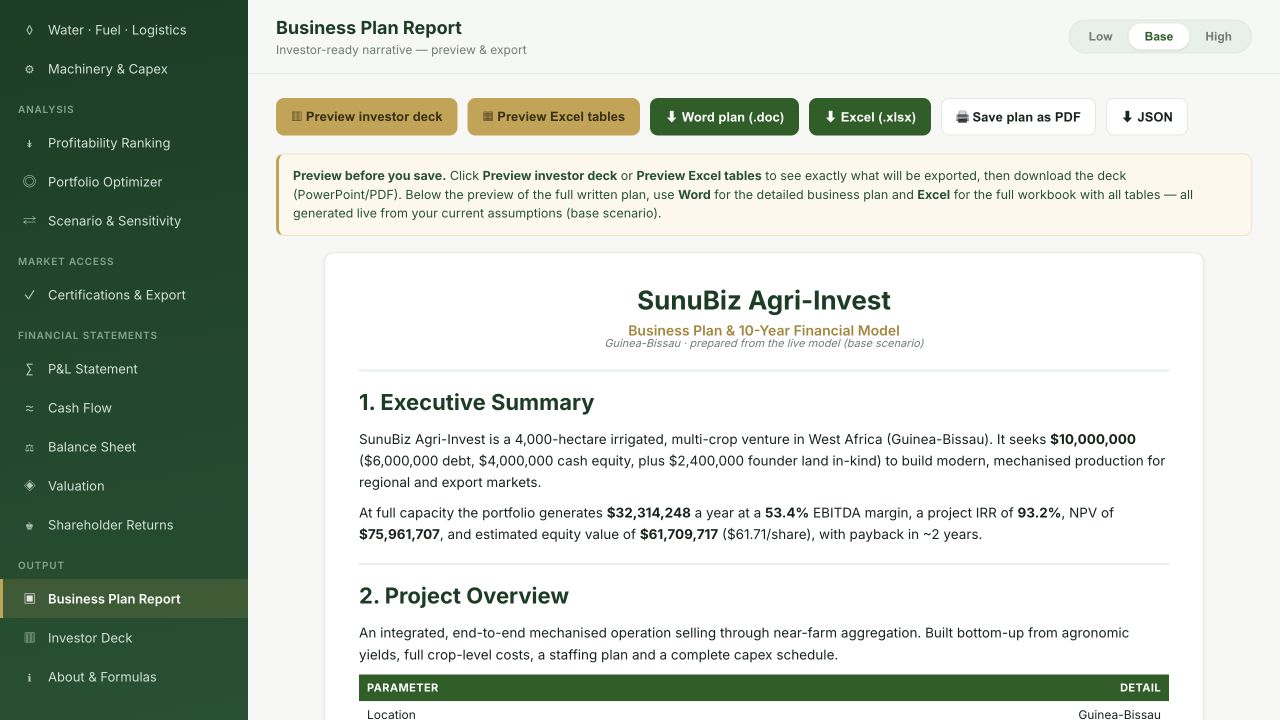
Generate management, business-plan, and investor outputs from the same connected assumptions.
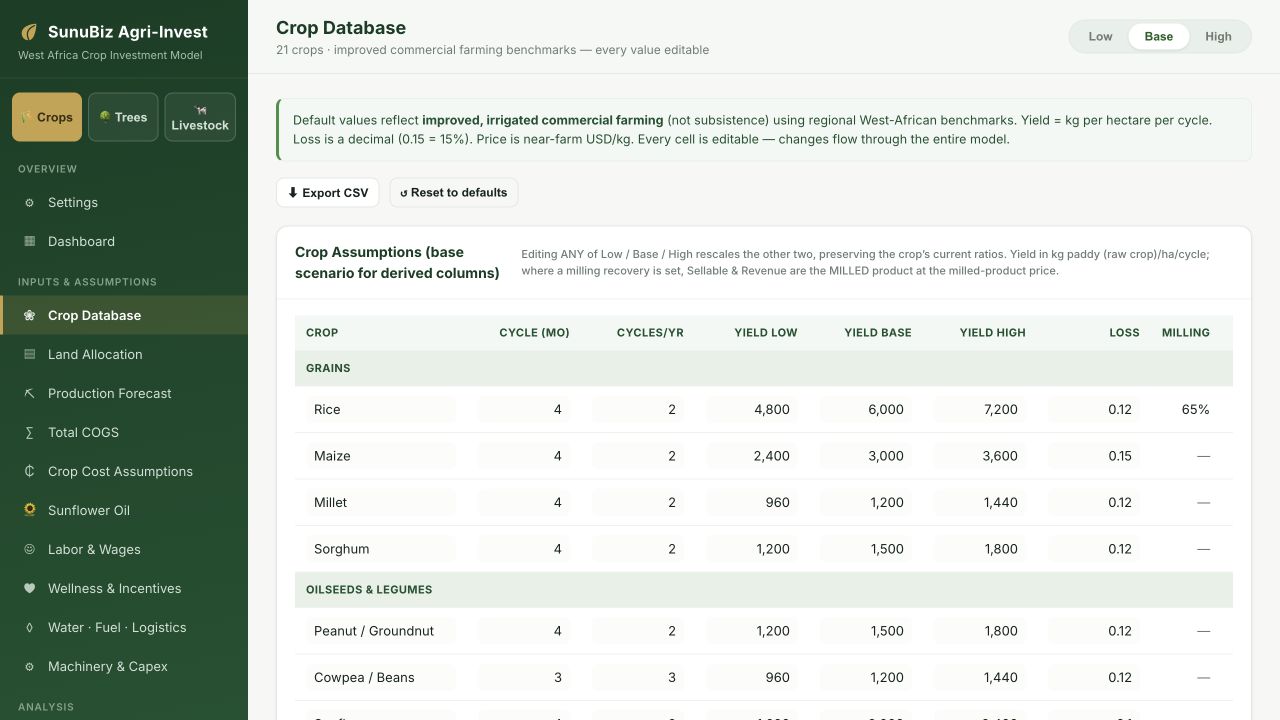
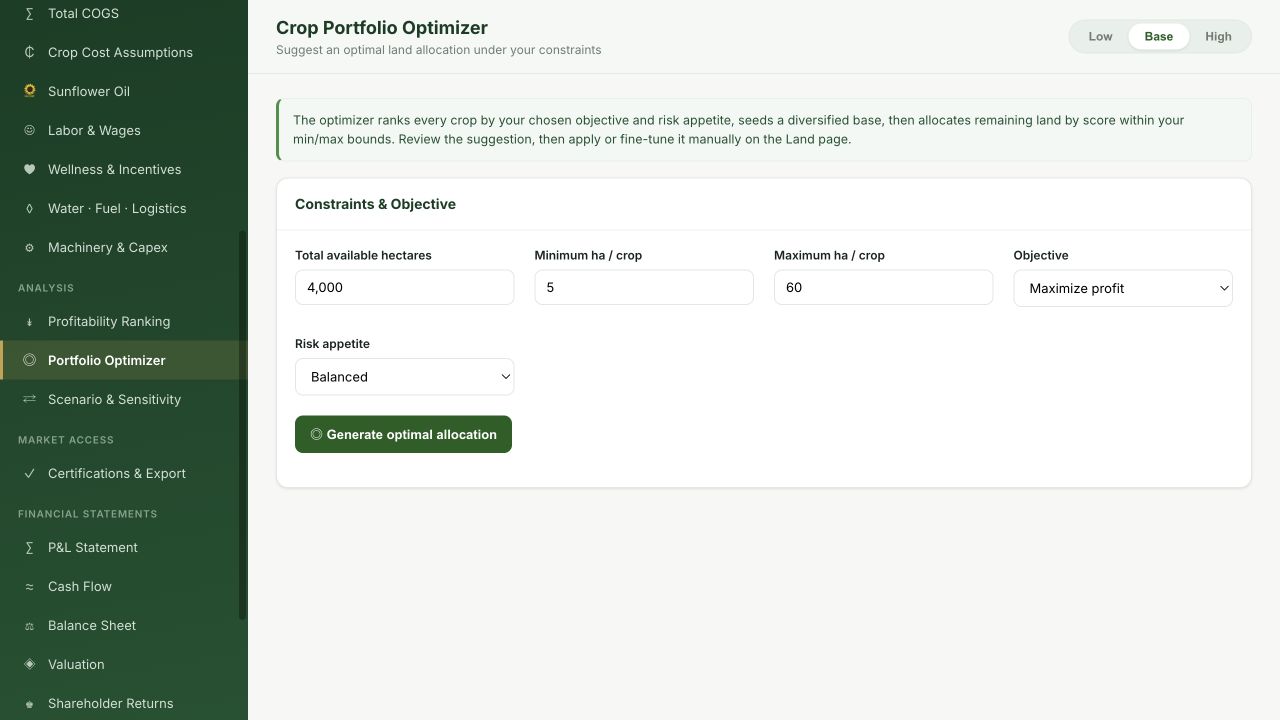
The Crops model compares annual and seasonal crops, allocates hectares, models yield and price, connects input and labor requirements, and ranks alternatives by profitability and capital efficiency.
The Trees model is built for orchards and perennial crops where establishment, juvenile growth, maturity, replacement cycles, and long-term land productivity determine the investment case.
The Livestock model captures the biological and operating relationships that drive dairy, meat, poultry, breeding, and mixed-animal enterprises.
Use the sequence below in Crops, Trees, or Livestock. Every change flows through the operating, financial, and investor outputs.
Choose Crops, Trees, or Livestock, then work in the Low, Base, or High case. Use Base as the most supportable operating plan.
Enter model horizon, land or capacity, currency, inflation, tax, financing, working capital, and valuation assumptions.
Add crop, tree, or animal categories; validate biological assumptions; and confirm production cycles, yields, prices, and losses.
Assign acreage or operating capacity, then check labor, water, fuel, logistics, machinery, housing, wellness, and capital needs.
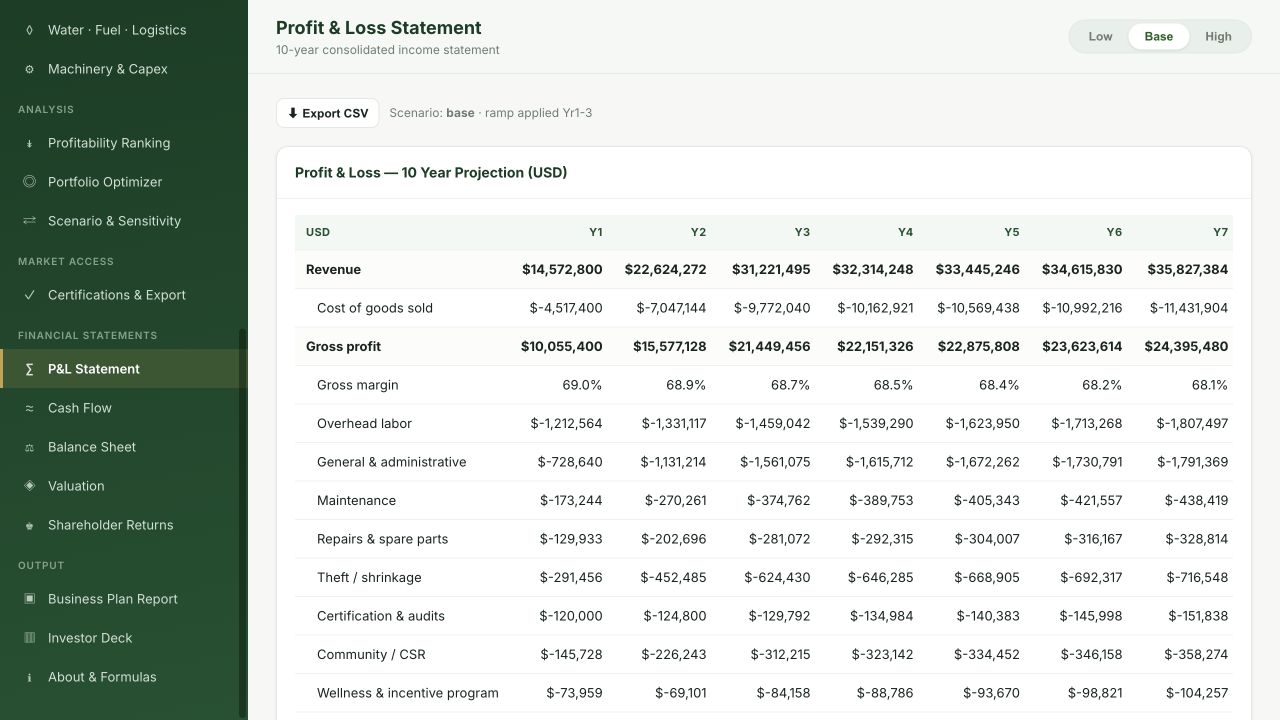
Inspect volume, revenue, COGS, cost per hectare or unit, labor, overhead, and the timing of capital expenditure.
Use profitability ranking, portfolio optimization, and sensitivity analysis to identify assumptions that matter most.
Reconcile P&L, cash flow, balance sheet, funding, debt, valuation, and shareholder returns, then produce the business plan or investor deck.
Good modeling practice: document the source and date of every important yield, price, cost, and financing assumption. Treat optimizer output as decision support, then apply agronomic, market, social, and execution judgment.
We can configure the model, validate assumptions, run scenarios, and turn the result into an operating plan and investor conversation.